

An acoustic performance needn’t be limited to the walk down the aisle. Thoughtfully placed, acoustic live music for weddings can welcome guests, ease the transition into dinner, and add an intimate thread to the celebration without making every moment feel the same. Whether a quieter musical format suits your day depends on more than volume: timing, repertoire, performance style, and venue all shape its effect.
That flexibility is part of the appeal. A reflective ceremony arrangement can give way to familiar songs over cocktails, then shift in character as the evening unfolds. Music feels personal when its choices reflect the couple rather than a standard list. Dubai-based guitarist and singer TITO GIPSY has more than 20 years of international live-performance experience, with musical influences spanning Flamenco, Andalusian-Spanish, Arabic, French, Italian, and global crowd favourites. His guitar-and-vocal performances offer one example of the character acoustic music can bring to a wedding.
This guide explores where live music can fit beyond the ceremony, how to choose a musical approach for each part of the celebration, and what to discuss with a performer and planner so the sound feels connected to your day.
Key Takeaways
- Acoustic live music for weddings describes a performance approach, not a single genre. Match the sound and scale to your venue and celebration style.
- Plan around the guest experience, choosing distinct moods for key moments instead of expecting one atmosphere to suit the whole day.
- Ask about a performer’s repertoire and discuss song preferences before confirming arrangements.
- Align your planner, venue contact, and performer on timing, performance location, sound restrictions, and technical requirements.
- Consider the performer’s experience and musical influences, then assess whether their approach fits the character you want for your celebration.
What Acoustic Live Music for Weddings Brings to a Celebration
Acoustic live music for weddings is a live performance in a comparatively natural, less production-led style, often featuring instruments such as guitar and vocals. Unlike a recorded playlist, it can respond in real time to the performer and the atmosphere in the room. Acoustic describes the approach, not a fixed genre, volume, or mood. Depending on the performance and setting, the sound can feel gentle and intimate or more animated.
Music can help give a celebration its own character, from the first guest arrivals to the final gathering of the evening. The role of music in weddings spans both ceremony and celebration. A live acoustic performance can add a sense of occasion through expressive vocals, instrumental detail, and subtle variation as the musician responds to the room. The effect isn’t automatic: repertoire, placement, performance style, and venue all influence how the music feels.
How live acoustic performance shapes atmosphere
Live guitar and vocals bring a human, visible presence to an event. At one moment, guests may pause for a meaningful song. At another, the music can sit within the ambience as people talk, dine, and reconnect. These are different listening experiences, and each calls for considered choices about repertoire, arrangement, and volume. Acoustic music isn’t always quiet or unobtrusive, and the venue’s sound conditions should be checked before deciding where and how it will work.
The choice is not simply “live or background.” Ask what each moment calls for. A featured performance may invite guests to listen, while music during drinks or dinner may be intended to support conversation. Tell the performer and planner what you want the music to do, so it complements the event rather than competing with it.
Where acoustic music can fit across the celebration
Depending on the schedule and setting, live acoustic music might welcome guests on arrival, accompany drinks, add warmth during a dining interval, or give an evening gathering a more personal character. Each placement has a different purpose. Music during a move between spaces, for example, may help the celebration feel continuous, while a relaxed meal may call for a more restrained presence.
For ceremony timing and individual cues, see the dedicated guide to ceremony cues. For the rest of the day, decide with your planner where live music belongs by considering the schedule, guest experience, venue requirements, and the mood you want each part of the celebration to carry.
How Acoustic Wedding Music Can Follow the Day’s Changing Energy
A wedding moves through distinct social moments: guests arrive, conversations gather, attention turns toward the couple, and the evening may grow more animated. Music can help those transitions feel considered rather than abrupt. Musical choices feel most natural when they reflect the celebration’s changing energy, leaving room for each moment to feel intimate, social, or lively as needed.
Live performance can bring a different kind of presence to each part of the day. A guitar-and-vocal arrangement may invite focused listening during a meaningful moment, while a lighter selection during drinks can add texture without making conversation feel secondary. Research and commentary on the psychological benefits of live music offer broader context for why a shared performance can feel emotionally resonant. The atmosphere at any particular wedding, however, depends on its guests and setting.
Matching musical presence to each part of the wedding
Rather than starting with a fixed song list, consider the experience you want guests to have at each stage. Arrival music might feel welcoming. The reception could call for a celebratory lift, while dining may benefit from a more measured presence. A later gathering might suit a livelier sound. These are starting points, not a prescribed schedule. You and your planner can decide where live music best serves the day.
Discuss placement and volume with the venue and event team. Consider the room layout, nearby conversations, and any venue sound restrictions. Agreeing on these details helps the performer understand whether a moment should draw guests’ attention or complement the atmosphere around them.
Balancing acoustic performance with playlists and other entertainment
Live music and recorded playlists can serve different purposes within one celebration. An acoustic set may bring expressive detail to guest arrival or dining, while recorded music may suit a later change in energy. Plan the transition: confirm who is responsible for each moment, when one source ends, and how the next begins. That helps the entertainment feel intentional rather than competing.
The practical choices depend on the venue’s acoustics, guest count, and event layout. An intimate room and an expansive reception space may call for different performance placements or sound arrangements. Share the event schedule and venue requirements with the performer and planner, then confirm timing and technical details directly rather than relying on assumptions.
For couples considering acoustic live music for weddings, this flexible approach can make a performance feel connected to the celebration rather than simply added to it. Explore TITO GIPSY’s live wedding performances as one example of guitar-and-vocal entertainment that can bring a distinctive musical character to an event.
Choosing the Right Acoustic Wedding Music Style and Performer
Acoustic describes how music is performed, not one genre or mood. Guitar and vocals might create a tender, reflective atmosphere or, with a different repertoire and delivery, bring more energy to a reception. The right choice depends on how you want guests to feel, which music you connect with, and how the performance fits the room and schedule.
Use this comparison as a starting point, then discuss specific repertoire and arrangements with prospective performers.
| Desired atmosphere | Repertoire fit | Performance approach | Event context |
|---|---|---|---|
| Warm and welcoming | Familiar, easy-listening songs | Music that supports conversation | Guest arrival or drinks |
| Personal and reflective | Songs with meaning to the couple | A focused, expressive performance | A featured moment in the celebration |
| International and distinctive | Influences that resonate with the couple or guest mix | Guitar and vocals shaped around the event | Reception or evening gathering |
| Lively and celebratory | Recognisable songs suited to a more animated mood | A more energetic acoustic delivery | A transition into later festivities |
Matching musical character to the couple and celebration
Consider your preferences alongside the guest mix and setting. Flamenco, Andalusian-Spanish, Arabic, French, and Italian influences can each suggest a different musical character. These are examples of repertoire possibilities, not a promised set list. Ask how a performer’s musical range could complement your celebration, and explore Spanish wedding music for a closer look at that tradition.
Acoustic doesn’t have to mean subdued. If you want a more spirited presence, say so clearly and discuss suitable repertoire, placement, and volume with the performer and planner. A musician’s past venue appearances may demonstrate experience, but they don’t establish that the same approach will suit your room or event.
Questions to ask before confirming a wedding performer
Specific, practical conversations can help you decide whether the musical fit is right. Guidance on hiring a wedding band can also inform what to discuss before making a decision.
- What performance format do you offer, and what range of repertoire can we discuss?
- What experience do you have performing at events with a similar atmosphere or setting?
- How will you coordinate timing, placement, and transitions with our planner?
- Can you confirm availability, travel arrangements, performance duration options, and technical requirements for our event?
Make the final details explicit before confirming. A performer’s experience and musical range matter, while clear communication helps establish whether both can be shaped to your celebration.
Planning Acoustic Live Music for a Wedding Without Last-Minute Surprises
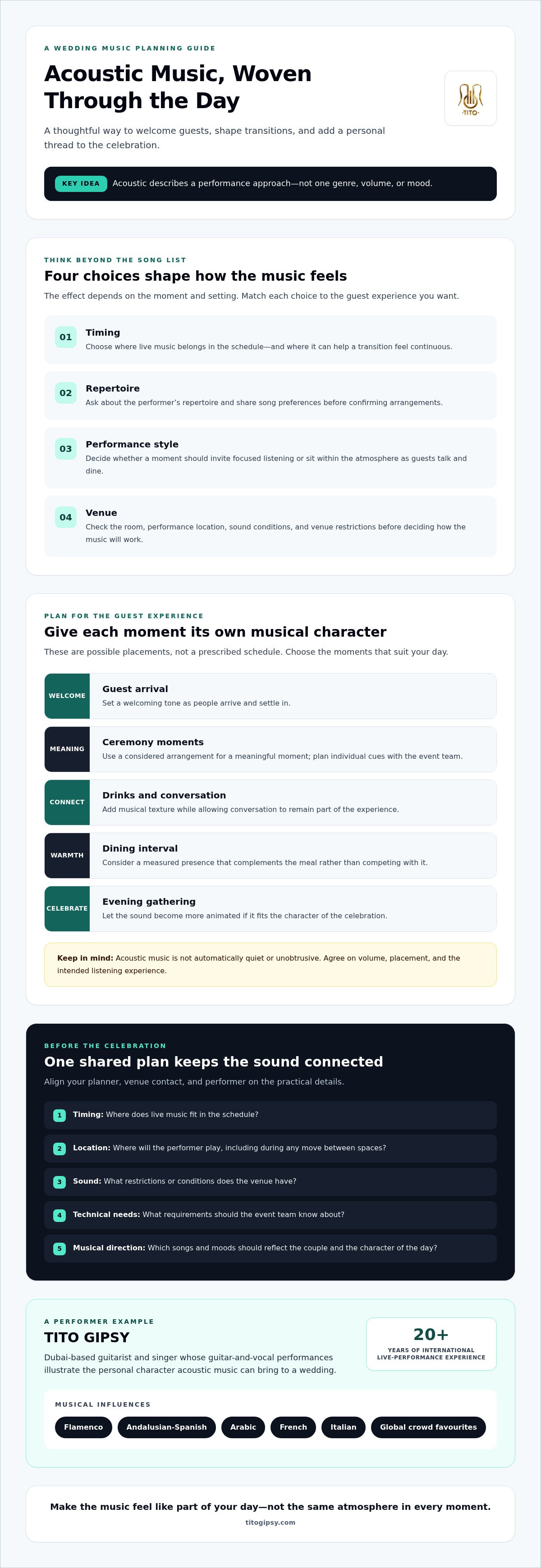
Good planning starts with the role you want music to play, then connects that vision to the venue and schedule. For acoustic live music for weddings, early coordination helps the performance feel integrated with the event rather than arranged around assumptions. You, your planner, the venue contact, and the performer should share a clear understanding of where music fits, how guests will experience it, and who will confirm each detail.
A practical planning sequence for live wedding music
Move from atmosphere to logistics in a few deliberate steps:
- Identify the moments. Decide where a live performance would add meaning or atmosphere, such as guest arrival, drinks, dining, or an evening gathering.
- Share the context. Give prospective performers the event setting, schedule, musical preferences, and a sense of the guest experience you hope to create.
- Confirm the arrangements. Align with the venue and planner on timing, the performance area, sound considerations, access, and the appropriate event contacts.
For ceremony-specific timings and cues, use the dedicated ceremony-cues guide rather than leaving entrances or transitions to informal instructions on the day. Confirm the intended cue and who will communicate it to the performer and planner.
Coordinating the venue, performer, and wedding schedule
A venue’s layout can affect where a musician performs and how guests hear the music. Ask the venue contact about location limitations or sound policies, including whether particular areas or arrangements are restricted. Then confirm the performance location and sound approach with the artist. Requirements depend on the event space, so discuss them directly rather than making assumptions.
Review the practical details with the relevant people: performer arrival and access, setup arrangements, the event schedule, and who is responsible for communicating changes. A final timeline review with the planner, venue, and performer can catch clashes between a musical moment and speeches, guest movement, or another scheduled part of the celebration. It also clarifies how one segment ends and the next begins.
Before confirming, check current availability, travel arrangements, performance duration options, and technical requirements directly with the artist. Keep the agreed details in writing and make sure the people overseeing the event have the same schedule. If you’re considering live wedding music, discuss your wedding performance plans with TITO GIPSY.
A Refined Acoustic Wedding Experience with TITO GIPSY
For couples considering acoustic live music for weddings, the performer’s artistic identity matters as much as the format. TITO GIPSY is a Dubai-based international guitarist and singer with more than 20 years of live-performance experience. His guitar-and-vocal performances bring an expressive, personal quality to a celebration, with musical influences spanning Flamenco, Andalusian-Spanish, Arabic, French, Italian, and global crowd favourites.
That breadth can be a starting point for a wedding with an international guest mix or a couple drawn to more than one musical tradition. It describes the range of influences informing his performances, not a fixed set list or guaranteed song selection. Couples can discuss the musical character they hope to create and how it might suit the setting and occasion.
An international repertoire for a distinctive wedding atmosphere
Different influences can lend a performance different colours, from the rhythmic character of Flamenco to the melodic warmth associated with Mediterranean traditions. Arabic, French, and Italian influences may also resonate with a couple’s story or the backgrounds represented among their guests. These traditions don’t need to be treated as separate blocks in a programme. Their relevance depends on the couple’s preferences and the event’s wider musical direction.
For a deeper exploration, a guide to multilingual and multicultural wedding music can help couples consider how language, heritage, and guest experience shape repertoire choices. When speaking with a performer, share the traditions or musical moods that matter to you, then discuss what could be reflected in the performance.
Discussing your wedding with TITO GIPSY
A useful first conversation can cover the wedding date, venue, event schedule, preferred atmosphere, and practical requirements. Sharing where the music might sit in the celebration helps establish whether a guitar-and-vocal performance suits the intended moment. Confirm the performance scope, travel arrangements, availability, duration options, and technical requirements for your specific booking.
TITO GIPSY has performed at Dubai Opera and is trusted by leading UAE event organisers. These details reflect his broader professional experience, not a wedding-specific endorsement or a guarantee that one arrangement will suit every venue. The setting, schedule, and couple’s preferences should guide the discussion.
Discuss the musical atmosphere for your wedding.
Shape a Wedding Soundtrack That Feels Like Yours
The most memorable acoustic live music for weddings is chosen with intention: it reflects the couple’s taste, suits the setting, and moves naturally with the celebration’s changing mood. A performer can create a moment for guests to listen closely or provide a warm musical thread through a more social part of the day. Clear planning with your venue and event team helps the music feel at home in the occasion.
TITO GIPSY brings more than 20 years of international live-performance experience to his work as a guitarist and singer. His experience includes a performance at Dubai Opera, and he is trusted by leading UAE event organisers. These details offer context for his artistry as you consider the sound and atmosphere you want. The right arrangements still depend on your event.
Share your wedding setting, schedule, musical preferences, and practical requirements to begin a considered conversation about fit. Discuss the musical atmosphere for your wedding. With thoughtful choices and clear coordination, live music can become a personal part of the celebration, connected to the day you have imagined.
Frequently Asked Questions
Is acoustic live music suitable for a wedding reception?
Yes. Acoustic live music can suit a wedding reception when its style, placement, and volume match the venue and the mood you want. A guitar-and-vocal performance might offer a welcoming musical backdrop during drinks or become a more attentive feature at a chosen moment. Discuss the guest count, room layout, and sound policies with your venue and performer before deciding how the music should fit into the reception.
Can acoustic music work for both a wedding ceremony and reception?
Yes, acoustic music can be considered for both, provided the performer’s availability, agreed performance scope, and event schedule allow for it. Ceremony cues require clear communication about timing and who will signal each entrance or transition. Reception music may serve a different purpose, from accompanying conversation to creating a livelier mood. Confirm the arrangements for each part separately rather than assuming one plan suits both.
What should we ask an acoustic wedding musician before booking?
Ask what performance format is available, which musical styles and repertoire the artist can discuss, and what experience they have with events similar to yours. Clarify how they coordinate with a planner, then confirm availability, travel arrangements, duration options, and technical requirements for your date and venue. Request a written summary of the agreed scope and schedule so everyone involved is working from the same details.
How do we choose acoustic wedding music that reflects our style?
Start with the feeling you want guests to experience, then identify songs, genres, languages, or cultural influences that are meaningful to you. Consider whether the music should invite attentive listening or complement conversation, and share those preferences with the performer. Acoustic live music for weddings can encompass many musical characters, so ask how an artist’s repertoire might reflect your taste without assuming every requested song or style is available.
Will acoustic live music be loud enough for our wedding venue?
It depends on the venue’s acoustics, layout, guest count, and sound policies, so there isn’t one volume level that suits every wedding. Share details about the performance location and intended listening experience with both the venue contact and performer. Ask how the music can be heard comfortably in that setting, and confirm any restrictions or technical requirements directly before finalising the arrangement.
How far in advance should we book live wedding music?
For a preferred performer, particularly on a peak-season date, begin enquiries well ahead of the wedding. Uptown Drive identifies 12 to 18 months as a common booking window for sought-after wedding bands, especially for peak Saturdays. Individual artist availability varies, so contact the performer to confirm your date and discuss travel and event requirements before treating any arrangement as confirmed.
Can one acoustic performer play different musical styles at a wedding?
Some performers have a repertoire that spans several genres, but the range varies by artist and should be discussed rather than assumed. TITO GIPSY’s influences include Flamenco, Andalusian-Spanish, Arabic, French, Italian, and global crowd favourites. Share the styles that matter to you and ask what could suit your event. These influences describe his musical breadth, not a guaranteed song list or fixed programme.

