

The most elegant spanish music for weddings doesn’t need to turn the celebration into a theme. Spanish guitar, expressive vocals and Flamenco can give different moments their own warmth and character. Understanding how these sounds differ helps couples choose music that feels personal rather than predictable.
It’s natural to wonder whether a distinctly Spanish sound will suit your venue, guests and preferred atmosphere. The answer often depends on how the music unfolds. A restrained guitar passage can lend intimacy to a ceremony or drinks reception, while more spirited rhythms may bring a later celebration to life without defining the entire day.
This article explores Spanish musical traditions and how they can complement different wedding moments, from guest arrival to the celebration that follows. It also considers how a performer with a broad musical vocabulary can shape the atmosphere around the occasion. TITO GIPSY brings more than 20 years of international live experience, including performances at Dubai Opera, to conversations about musical atmosphere and event fit.
Key Takeaways
- Think of Spanish music for weddings as a varied musical palette, not a single fixed sound or an all-or-nothing theme.
- Distinguish Spanish guitar’s expressive sound from Flamenco’s distinctive tradition and broader Andalusian influences.
- Match musical intensity to the day’s progression, from an intimate ceremony or drinks reception to a livelier later celebration.
- Start with the atmosphere you want, identify the moments that matter most, then discuss musical preferences with an experienced performer.
- A musician’s range and event awareness can help Spanish influences feel personal and fit naturally with the wider celebration.
What Spanish Music Brings to a Wedding’s Atmosphere
Spanish music for weddings is best understood as a broad musical palette rather than one prescribed sound. Spanish guitar, vocals, rhythmic traditions and regional influences each bring a different quality, from quiet romance to buoyant celebration. The result need not be a fully themed event. Music can add cultural character while remaining in graceful conversation with the couple’s own style.
A Spanish musical influence is an atmosphere created through sound, not a requirement to build the wedding around a complete theme. This gives couples room to choose a few meaningful musical moments or let live performance gently shape the day without dictating its décor.
Spanish musical character beyond a themed décor concept
Begin with the experience you want guests to have. A warm, expressive sound may suit an intimate welcome, while stronger rhythmic energy can bring movement to a later celebration. These choices can complement contemporary styling as naturally as a traditional setting. Spanish music itself is varied; for example, Flamenco is a distinctive tradition associated with song, dance and guitar, not a label for every Spanish musical influence.
Thinking first about mood helps keep the music personal. You might choose a refined, romantic character without creating a Spanish-themed setting, or introduce livelier sounds as one part of a celebration shaped by several cultures.
Why live Spanish guitar can feel intimate and expressive
In a close setting, acoustic guitar offers a direct, nuanced sound. Changes in pace, phrasing and intensity can make a passage feel reflective, welcoming or animated. Vocals add another expressive dimension, bringing human warmth to focused listening as well as conversation.
That flexibility is useful across the changing rhythms of a wedding. A gentle musical presence can welcome guests without overwhelming the room; a more pronounced pulse can invite attention or lift the energy when the moment calls for it. Discuss musical choices with the performer so the sound suits the setting and your preferences, rather than relying on assumptions about particular songs or arrangements.
Live Spanish guitar and vocals can bring intimacy and character to a contemporary, traditional or multicultural celebration. The defining choice is not how much Spanish styling surrounds the music, but how its sound supports the atmosphere you hope to create.
Spanish Guitar, Flamenco, and Andalusian Influences Explained
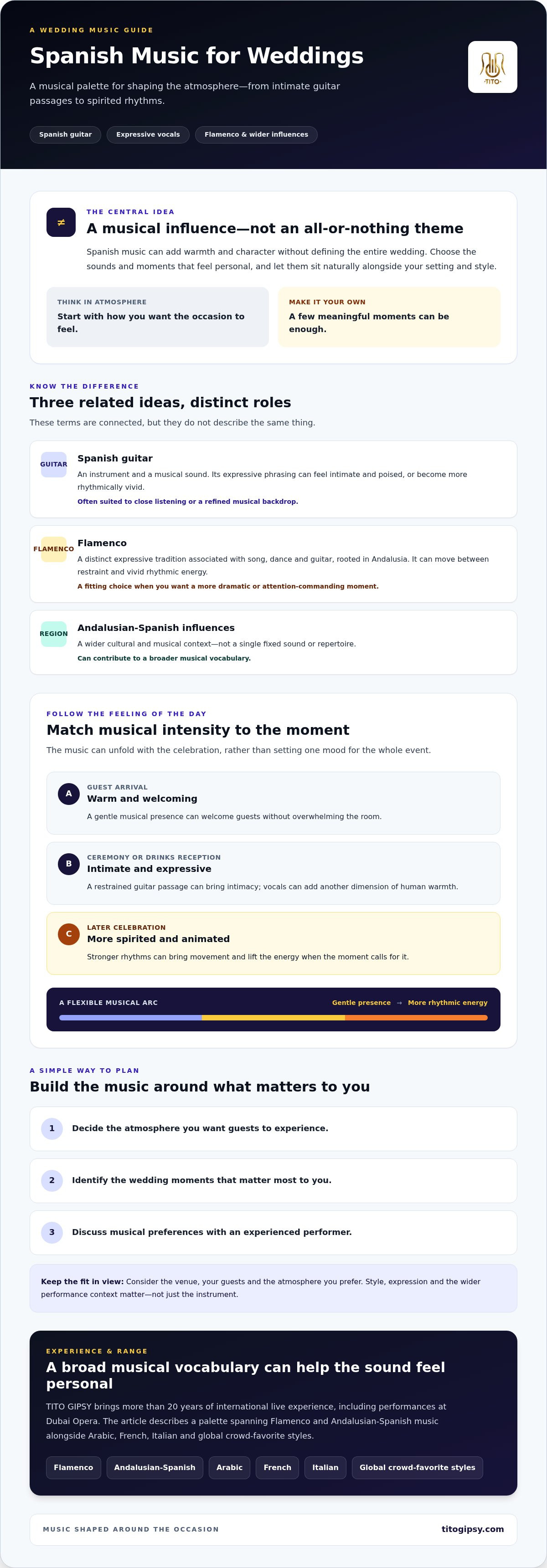
These terms are related, but describe different things. Spanish guitar refers to an instrument and a musical sound; Flamenco is a distinct expressive tradition; Andalusian-Spanish influences point to a wider cultural and musical context. Knowing the difference helps couples describe the feeling they want without treating every Spanish-inspired performance as interchangeable.
Spanish guitar is a sound shaped around the instrument; Flamenco is a performance tradition in which guitar may meet song, dance and a more pronounced rhythmic character. Either can contribute to Spanish music for weddings, but neither represents the full range of Spanish musical expression.
What makes Flamenco distinct at a wedding
Flamenco can feel intense and emotionally direct, moving between restraint and vivid rhythmic energy. Its cultural history is rooted in Andalusia, with influences that reflect the region’s interwoven traditions; Britannica’s account of the origins of flamenco offers useful context. At a wedding, that expressive quality may suit a moment when you want the music to command attention or give the celebration a more dramatic character.
It isn’t the only fitting choice. Some couples may prefer a gentler, guitar-led atmosphere, while others may want Flamenco’s stronger sense of movement. The right fit depends on the occasion, the room and the emotional register you want, not on an assumption that Spanish music must sound one particular way.
How Spanish guitar and broader influences create different moods
Spanish guitar can carry a melodic passage with intimacy and poise, making it well suited to close listening or a refined musical backdrop. A performance can also become more rhythmically vivid, shifting the atmosphere from reflective to celebratory. The instrument itself doesn’t determine whether the music is Flamenco; style, expression and the wider performance context matter too.
Andalusian-Spanish character can sit alongside other influences, creating a broader musical vocabulary rather than a single fixed repertoire. TITO GIPSY’s confirmed palette includes Flamenco and Andalusian-Spanish music alongside Arabic, French, Italian and global crowd-favorite styles. That range provides a starting point for discussing how influences might complement one another, but it isn’t a guaranteed setlist. Describe the moods and cultural references you value, then discuss what suits your event with the performer.
For a clearer sense of how these distinctions translate into a live wedding setting, explore the live wedding performance approach and consider which musical character feels most at home in your celebration.
Where Spanish Music for Weddings Fits Across the Celebration
Spanish music for weddings can shape the day through contrast: a restrained opening, a warm musical thread through conversation, then a more animated passage when guests are ready to give it their attention. Let the schedule and setting guide those choices instead of following a fixed formula that assigns one style to every ceremony or reception.
Use this guide as a starting point, then adjust the intensity to the room, guest experience and flow of the celebration.
| Wedding moment | Desired atmosphere | Musical intensity |
|---|---|---|
| Guest arrival and ceremony | Welcoming, intimate and composed | Gentle and measured |
| Drinks reception | Warm, sociable and expressive | Light to moderate, leaving space for conversation |
| Dinner | Elegant and relaxed | Restrained, with a comfortable listening level |
| Later celebration | Joyful and more animated | More pronounced, at a moment guests can focus on the music |
Choosing music for ceremony and guest arrival
As guests arrive and settle, a measured musical presence can establish warmth without competing with greetings or the ceremony. Share the event timeline with the planner, ceremony team and performer, and confirm how cues should align with entrances, transitions and spoken moments. Discuss specific songs and arrangements directly with the performer rather than assuming a requested selection will be available.
Shaping reception energy without overpowering conversation
Drinks and dinner often involve movement and conversation, so consider a softer musical presence during those intervals. Later, a distinct shift in energy can make the music feel intentional. A livelier passage may be more effective once guests have finished dining or gathered somewhere they can focus on the performance.
Venue acoustics and placement matter as much as style. Ask the venue team where a performer can be positioned, how sound carries between spaces and what level suits the room. A performance that feels balanced in an open reception area may carry differently in a smaller dining room.
Transitions help the musical thread feel integrated rather than repetitive. The shift might come through a change in energy, a move between cultural influences or a pause that lets the next part of the celebration emerge naturally. Agree on these broad intentions with the performer and planner, while allowing the music to respond to the pace of the day.
How to Make Spanish Wedding Music Feel Personal and Well Balanced
A considered musical choice begins with the couple, not a checklist of supposedly essential Spanish elements. Spanish music for weddings can sit beautifully within a contemporary or multicultural celebration, adding warmth or rhythmic character without requiring Spanish décor, dress or a fully themed programme.
Use this simple sequence to shape the direction:
- Define the mood. Choose a few words for the experience you want, such as intimate, romantic, elegant or celebratory.
- Identify the moments. Decide where live music would add meaning, and where conversation or quiet may matter more.
- Discuss musical preferences. Share traditions, influences and references that feel significant, while staying open to the performer’s guidance on what suits the setting.
Balancing Spanish character with a multicultural celebration
Consider the cultural context of the couple and guests before deciding how different influences should meet. Spanish guitar or Andalusian-Spanish character might provide a musical thread, while other influences appear at selected moments rather than blending every tradition into one uninterrupted sound. A thoughtful conversation about personal meaning and guest experience helps each choice feel respectful and intentional.
Variety can offer a point of connection for guests with different backgrounds, but it shouldn’t be treated as automatic. Be specific about what matters to you, and consult the people connected to any cultural traditions you plan to include.
Questions to settle before confirming live music
Practical clarity helps an artist understand the role you have in mind. Share the schedule, venue setting, anticipated audience size and whether you picture the music as a subtle presence or a focal moment. Then confirm the intended performance duration, transitions and timing cues with the artist and event organizer.
- Where will the performance take place, and what should the venue team advise about acoustics and placement?
- Which musical moods or traditions are important, and are there references that communicate them clearly?
- How will the performance fit around ceremony cues, speeches, dinner and other scheduled events?
- What travel or arrival arrangements need to be confirmed for the venue and event date?
These details help turn an evocative idea into a plan that fits the celebration. TITO GIPSY’s musical palette includes Flamenco, Andalusian-Spanish, Arabic, French and Italian influences, offering a useful basis for discussing how different colours might suit a wedding without assuming a particular setlist.
Details about the artist’s wedding music approach can help you consider how live performance might reflect your preferences and event setting.
Bringing Spanish Music to Life with an Experienced Live Performer
Choosing a musical tradition is only part of shaping a memorable performance. Musicianship gives the music expressive detail; event awareness helps it sit naturally within the day; clear communication connects the performance to the couple’s intentions and the planner’s schedule. With Spanish music for weddings, that combination can make the sound feel considered rather than simply decorative.
What an experienced guitarist and singer can contribute
Live guitar and vocals bring a present, human quality to a wedding. Phrasing can feel intimate, while changes in musical energy can respond to the character of the occasion. TITO GIPSY is an international guitarist and singer with more than 20 years of live performance experience, including luxury weddings and events across the UAE and internationally. His appearance at Dubai Opera is part of his performance career, not a wedding-specific endorsement.
His musical palette includes Flamenco and Andalusian-Spanish influences alongside Arabic, French, Italian and global crowd-favorite styles. That breadth can provide a starting point for discussing how Spanish character might fit the celebration, particularly when the couple values more than one cultural influence. Agree on the musical direction with the performer rather than assuming it from a general description of style.
Discussing a Spanish-inspired wedding performance
A productive conversation starts with the celebration itself. Share the venue, event schedule, moments you want music to support, and any cultural preferences or considerations that should shape the performance. Explain whether you imagine the music as an intimate presence or a more prominent part of the occasion, then discuss musical references and the atmosphere you hope to create.
Performance scope depends on details such as event duration, venue type, travel requirements and performance scale. Clarifying these early helps align expectations around timing and the role music will play, without presuming a particular format or setlist.
An experienced performer can bring artistic judgement as well as musical skill, helping translate your preferences into an approach that feels appropriate to the room and occasion. For a considered conversation about your celebration, venue, timing and musical direction, review TITO GIPSY’s live performance approach.
Let the Music Follow the Feeling of Your Day
The most memorable spanish music for weddings is chosen for how it makes each moment feel, not simply for its cultural label. Spanish guitar and Flamenco offer distinct expressive colours, while thoughtful shifts in intensity can carry the celebration from intimate welcomes to livelier shared moments. A personal selection can sit naturally within a contemporary or multicultural wedding without requiring a complete theme.
For couples considering live performance, TITO GIPSY brings more than 20 years of international experience, Spanish and Flamenco influences within a broader musical palette, and a performance history that includes Dubai Opera. These credentials provide a basis for discussing how the music might suit your celebration, while the final direction remains shaped by your preferences, venue and schedule.
Discuss your wedding’s musical direction with TITO GIPSY, including the atmosphere you hope to create and the moments you want music to accompany. With a clear sense of feeling and a thoughtful conversation, you can make the music distinctly yours.
Frequently Asked Questions
What kind of Spanish music is suitable for a wedding?
Spanish music can range from melodic, guitar-led passages to the distinctive expression of Flamenco and other Andalusian-Spanish influences. The most suitable choice depends on the atmosphere you want, the setting and the role music should play. Consider whether you’re seeking intimacy, warmth or a more vivid celebratory presence, then discuss musical references with the performer instead of assuming one style represents every Spanish tradition.
Is Flamenco appropriate for a wedding ceremony?
Yes, Flamenco can be appropriate for a ceremony if its expressive character suits the couple and the moment. Consider whether you want music to remain a subtle accompaniment or take a more prominent role, and discuss the ceremony’s timing, tone and cues with the performer and planner. A Spanish guitar-led approach may also offer a gentler character. The choice should reflect the ceremony you’re planning, not a rule that Flamenco must be included.
Can Spanish music work at a multicultural wedding?
Yes, Spanish music can form one meaningful thread in a multicultural celebration without requiring the entire wedding to follow a single theme. Identify which traditions and musical influences feel personally significant, then decide where each belongs in the day. Discuss cultural choices with the people connected to them, rather than assuming every element can be blended without consideration. A deliberate progression between influences can help the programme feel cohesive and personal.
How can Spanish guitar create a romantic wedding atmosphere?
Spanish guitar can create a romantic atmosphere through melodic phrasing, expressive changes in intensity and intimate acoustic character. It may provide a gentle musical presence as guests arrive or a moment of focused listening during a quieter part of the celebration. The desired effect depends on the room, performance level and musical choices, so share your preferred mood with the performer and confirm which arrangements suit the occasion.
What is the difference between Spanish guitar and Flamenco?
Spanish guitar is an instrument and a sound, while Flamenco is a distinctive musical tradition in which guitar may be part of a wider expressive performance. The terms aren’t interchangeable: guitar-led Spanish music can have a range of moods and influences without being Flamenco. For wedding planning, describe whether you’re drawn to the instrument’s melodic intimacy, Flamenco’s more dramatic character or another Spanish-inspired sound.
When should Spanish music be played during a wedding?
Spanish music can accompany guest arrival, the ceremony, drinks, dinner or a later celebration, depending on the schedule and the atmosphere each moment calls for. A quieter musical presence may suit arrival or conversation, while a more animated passage can be reserved for a moment when guests can focus on it. Coordinate performance cues with the planner and venue, and confirm timing and musical selections with the performer.
Can a live performer combine Spanish music with other styles?
Yes, a performer with a broad musical vocabulary may be able to bring Spanish influences into a programme alongside other styles, subject to discussion and agreed performance scope. TITO GIPSY’s palette includes Flamenco and Andalusian-Spanish music, as well as Arabic, French, Italian and global crowd-favorite styles. Share the influences and moods that matter to you, then confirm the musical direction directly rather than assuming a particular song or setlist.

